
Neuroethics 2025
Munich, Germany + Virtual
April 23-25, 2025
The annual meeting of the International Neuroethics Society (INS) and the Società Italiana di Neuroetica (SINe) was held in Munich, Germany on April 23-25, 2025.
Wednesday, April 23
Opening Remarks
9:00-9:30am
- Philipp Kellmeyer, University of Mannheim / University Medical Center Freiburg
- Marcello Ienca, Technical University of Munich
- Prof. Dr. Markus Schwaiger, President of the Bavarian Academy of Sciences
- Federico G. Pizzetti, University of Milan / President SINe
Read remarks from Federico G. Pizzetti.
Global Perspectives on NeuroAI Policy
9:30-10:30am / Recording
This session explores global policy perspectives on NeuroAI, featuring international experts from UNESCO, the OECD, Council of Europe, and leading research institutions. The discussion addresses ethical, legal, and governance challenges related to AI-enabled neurotechnologies and the urgent need for responsible, coordinated global frameworks.
- Limor Shmerling Magazanik, OECD
- Alena Buyx, Technical University of Munich
- David Winickoff, OECD / Sciences Po Law School
- Dafna Feinholz, UNESCO
- Laurence Lwoff, Council of Europe
- Marcello Ienca, Technical University of Munich (moderator)
Break 10:30-11:00am
SINe Award 2025 in Neuroethics and Philosophy of the Neurosciences
11:00am-12:00pm / Recording

Prof. Ophelia Deroy
Ludwig-Maximilians-Universität München
We proudly to hosted the presentation of the SINe Award 2025 in Neuroethics and Philosophy of the Neurosciences to be awarded to Prof. Ophelia Deroy who gave a talk titled ‘Neurotechnologies and the Ethics of Unresolvable Questions’.
Lunch
12:00-1:15pm
International Neuroethics and its Challenges: IBI and IEEE Perspectives
1:15-2:15pm / Recording
This session explores critical challenges in international neuroethics, bringing together perspectives from the International Brain Initiative (IBI) Neuroethics Working Group and the IEEE Neuroethics Framework Wellness Working Group. With a roundtable format, it facilitates deep, interactive discussions on pressing ethical dilemmas surrounding the global management of neural data and the regulation of wellness technologies. By addressing these topics in a collaborative, multidisciplinary environment, the session aims to identify pathways for translating ethical frameworks into practical, internationally relevant solutions.
- Judy Illes, IBI Chair (introductory speaker, in-person)
- Junichi Ushiba, Keio University / Lifescapes (panelist, in-person)
- Masatoshi Kokubo, University of Tokyo (panelist, in-person)
- Ji Hyun Yang, Yonsei University College of Medicine (panelist, in-person)
- Adriana Cristina Pliego Carrillo, Autonomous University of Mexico State (panelist, in-person)
- Jennifer A Chandler, University of Ottawa (panelist, in-person)
- Tamami Fukushi, Tokyo Online University (discussion leads, in-person)
- Katherine Bassil, UMC Utrecht / Technical University of Munich (discussion leads, in-person)
Break 2:15-2:30pm
SINe Award 2025 in Neuroscience
2:30-3:30pm / Recording
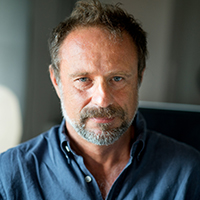
Marcello Massimini MD, PhD
Professor of Neurophysiology
Department of Biomedical and Clinical Sciences, University of Milan
IRCCS Fondazione Don Carlo Gnocchi, Milan
We proudly hosted the presentation of the SINe Award 2025 in Neuroscience to be awarded to Prof. Marcello Massimini who gave a talk titled: Consciousness and Network Complexity: from Principles to Bedside.
Break 3:30-3:45pm
Poster Presentations
- Video Recordings 3:45-4:00pm
- Poster Presentations 4:00-5:30pm
Thursday, April 24
Poster Presentations
9:00-10:30am
Break 10:30-11:00am
Welcome
8:45-9:00am / Recording
Research Talks
11:00am-12:00pm
Plenary / Recording
- Hey Siri! what should I target? AI-powered neuroenhancement in the military and the question of legal and moral responsibility
Joseph White. Department of Philosophy, Central European University. (in-person) - The 5C Ethical Lens for Multilingual Neurotechnology and Low-Resource Language Inclusion
Abigail Oppong. Independent (in-person) - A Critical Examination of Consent and Alienation in the Context of Brain-Computer Interfaces (BCIs)
Luiza de Paula Araujo Galvao Cunha. University of Barcelona (in-person) - Protecting our thoughts: Are data protection frameworks ready for implantable brain-computer interfaces?
Julian D Sandbrink (1,2), Michael J Young (1,3). 1. Harvard Medical School; 2. Charité Universitätsmedizin Berlin; 3. Massachusetts General Hospital Center for Neurotechnology and Neurorecovery. Presenter: Julian D Sandbrink (in-person)
Library / Recording will be available soon
- All in my head? Brain morphology, social determinants of Health, and neuroethics in the Symptomatology of adult post-traumatic stress disorder
Craig McFarland (1); Henri Garrison-Desany (2); Christy Denckla (2). 1. Harvard University; 2. Harvard T.H. Chan School of Public Health. Presenter: Craig McFarland (in-person) - Neurotechnology in Support of the Resocialization of Juvenile Offenders in Brazil
Antonio Jorge Pereira Júnior. University of Fortaleza, School of Law and PhD Program on Constitutional Law. Presenter: Antonio Jorge Pereira Júnior (in-person) - To be excluded or commodified: The risks of AI-driven precision medicine in the clinical neurosciences
Ian Stevens (1,2), Benjamin Collins (3). 1. The Hastings Center; 2. Center for Bioethics, Harvard Medical School; 3. Vanderbilt University Medical Center. Presenter: Ian Stevens (virtual) - Bridging gaps in neurotechnology development: Industry insights on navigating academic collaborations
Tristan McIntosh, Meredith Parsons, Erin Solomon, Michael Kudom-Agyemang, Judith Mwobobia. Washington University School of Medicine, Bioethics Research Center. Presenter: Tristan McIntosh (virtual)
Lunch
12:00-1:15pm
State-Level Governance of Neurotechnology: Global Perspectives from Ibero-America and Beyond
1:15-2:15pm / Recording at 2:59:00
This roundtable examines how state-level governance of neurotechnology can effectively address ethical challenges at the intersection of artificial intelligence (AI) and emerging neurotechnologies. Speakers draw on lessons from Ibero-American initiatives and then broaden the scope by comparing these efforts to noteworthy global proposals from the United States, Spain and France.
- Arleen Salles (U.S. / Argentina) – Institute of Neuroethics (IoNx) (moderator)
- Diego Borbón (Colombia) – Universidad Externado de Colombia (speaker)
- Laura Cabrera (Mexico) – Penn State, Rock Ethics Institute (speaker)
- Eduardo Demetrio Crespo (Spain) – Universidad de Castilla-La Mancha (speaker)
- Abel Wajnerman Paz (Chile) – Universidad Católica de Chile (speaker)
The Dawn of Highly Portable AI-Enabled MRI Research in the Community: Proactively Addressing ELSI Challenges
1:15-2:15pm / Recording at 1:00
This interactive session explores the ethical, legal, and societal implications (ELSI) of highly portable AI-enabled MRI technologies (pMRI). Discussion examines four areas, including: the ethics of pMRI research with indigenous communities; the ethics of pMRI research in low-resource countries; the promise and ethical concerns of pMRI for making MRI research participation more accessible for people of low socioeconomic status (SES); and critical ethical issues surrounding data sharing across large multinational imaging platforms.
- Francis X. Shen, JD, PhD, MGH Center for Law, Brain & Behavior (moderator, in-person)
- Judy Illes, CM, PhD, University of British Columbia (panelist, in-person)
- Olivia Matshabane, PhD, Stellenbosch University (panelist, in-person)
- Martha J. Farah, PhD, University of Pennsylvania (panelist, virtual)
- Linda Chaabane, PhD, Euro-BioImaging Med-Hub (panelist, virtual)
Break 2:15-2:30pm
Embedding Ethics in Neurotechnology Industry – Lessons from the AI Sector
2:30-3:30pm / Plenary / Recording
This session critically examines how neuroethics can deeply engage with a rapidly growing neurotechnology industry by drawing insights from the AI ethics sector. Experts in embedded ethics, AI, and neurotechnology industry jointly reflect on the resonances between ethical considerations in AI and neurotechnology, identify successes and challenges of embedded ethics, and highlight lessons that the neurotechnology industry can draw from AI ethics.
- Sara Berger, IBM Research (Panelist, Virtual)
- Juhi Farooqui, University of Pennsylvania (Moderator, In-Person)
- Stuart McLennan, Technical University of Munich (Panelist, In-Person)
- Jacob Robinson, Motif Neurotech (Panelist, Virtual)
International Controversies over ta-NRP for Organ Procurement: Brain Perfusion and the Dead Donor Rule
2:30-3:30pm / Recording at 11:10 / Alex Manara’s slides (pdf)
This panel explores experiences of and concerns about Thoracoabdominal normothermic regional perfusion (ta-NRP) in different cultural and legal contexts. Experts identify and critique different conceptions of the role of the brain in informing perspectives on the permissibility of ta-NRP, as well as discuss how national professional and public norms around the brain affect views of this controversial procedure.
- Karola Kreitmair, PhD, University of Wisconsin–Madison (moderator, discussant, in-person)
- Amelia Hessheimer, MD PhD, Hospital Universitario La Paz, Madrid (discussant, in-person)
- Alex Manara, MB BCh, North Bristol NHS Trust (discussant, virtual)
Break 3:30-4:00pm
ELSA EPNA Award 2024: Excellent Paper In Neuroscience with thematic focus on ‘Ethical, Legal, and Social Aspects (ELSA) of Neuroscience’
4:00-4:45pm / Recording
We proudly hosted the ELSA EPNA Award 2024 research talk given by winning author Dr. Renée Hartig who gave a talk on their research published in: “A framework and resource for global collaboration in nonhuman primate neuroscience“, Current Research in Neurobiology, Vol. 4, 100079, 2023.

Renée Hartig
Nathan Kline Institute for Psychiatric Research / NYU School of Medicine
Talk title: Towards a Global Research Network: A Framework for Non-Human Primate Neuroscience
Sponsored by ERA-NET NEURON
Steve Hyman Award Presentation
4:45-5:00pm / Zoom
- Presentation of the Steven E. Hyman Award for Distinguished Service to the Field of Neuroethics
- Honoree: Ilina Singh
- Comments from the honoree
Business Meeting
5:00-5:30pm
- Announcements
- Open discussion
Venue closes at 6:00pm
Friday, April 25
Flash Firechat
From Brussels with Law: How the EU Regulates Non-Medical Neurotech (and What to Learn from It)
9:15-9:30am / Recording at 2:04
- Introduction by Marcello Ienca, Technical University of Munich
- Jan Christoph Bublitz, University of Hamburg
Research Talks
9:30-10:30am
Plenary / Recording at 24:54
- Towards a low-tech neuroethic
Timothy Daly. Bordeaux Population Health, Université of Bordeaux & INSERM; Bioethics Program, FLACSO Argentina. (in-person) - Self-tracking, Neurotechnology, and Epistemic Self-confidence
Nicolai Wohns, Natalie Dorfman. Department of Philosophy, University of Washington. Presenting: Nicolai Wohns (in-person) - The impact of bci on autonomy: a relational perspective
Alessia Cadelo. Lumsa University. (in-person) - Safeguarding the mind from AI: a context-based or a risk-based approach? Philosophical, ethical, and legal perspectives
Fiorella Battaglia (1), Corrado Claverini (1), Giuseppe Di Vetta (2), Gaia Fiorinelli (2). 1. Unisalento – Salento University (Italy); 2. Sant’Anna School of Advanced Studies Pisa (Italy). Presenting: Gaia Fiorinelli, Corrado Claverini (in-person)
Library / Recording at 21:10
- Institutional Review Boards in Neurotechnology Research: A Critical Examination
Megh Marathe (1), Michelle T. Pham (2). (1) Department of Media & Information, Center for Bioethics & Social Justice Michigan State University; (2) Center for Bioethics and Social Justice, Department of Medicine, Michigan State University. Presenter: Michelle T. Pham (in-person) - When data disagrees: ethical challenges in weighing conflicting data sources for personalized neuromodulation
Meghan Hurley (1), Eric Storch (2), John Herrington (3), and Kristin Kostick-Quenet (1). 1. Center for Medical Ethics and Health Policy, Baylor College of Medicine; 2. Department of Psychiatry and Behavioral Sciences, Baylor College of Medicine; 3. Department of Child and Adolescent Psychiatry and Behavioral Sciences, Children’s Hospital of Philadelphia. Presenter: Meghan Hurley (in-person) - The Ethics of Artificial Intelligence in Neurosurgery: Examining Moral Responsibility and Accountability in Medical Practice
Binh Trang. University of North Carolina at Chapel Hill (virtual) - 100 Years of EEG: Ethical Challenges in the Age of AI
Wing Yu Kan (1), Tammy Yue Ken Tam (2). 1. St Stephen’s College 2. SunRise Kids. (virtual)
Break 10:30-11:00am
Digital Bioethics: Computational Methods for Addressing Neuroethical Questions
11:00am-12:00pm / Recording at 2:54
In this session, we start with an introduction to digital methods for neuroethical inquiry, present two specific examples of successful research in the field and highlight both the potential and challenges of our methodological approach in a plenary discussion.
- Georg Starke, Technical University of Munich
- Ralf J. Jox, University of Lausanne
- Sabine Salloch, Hannover Medical School
- Alexander Sobieska, Technical University of Munich
Organoid Intelligence
11:00am-12:00pm / Recoding at 12:20
The session investigates the emerging theoretical and ethical implications of developing brain organoids as biological hardware for AI, a novel biotechnological field known as “Organoid Intelligence”. The aim is to bring together various perspectives to examine opportunities and challenges raised by this new frontier, including neuroethics, microbiology, bioethics, and philosophy of mind.
- Andrea Lavazza, Pegaso University (moderator, in-person)
- Thomas Hartung, Johns Hopkins University (speaker, virtual)
- Federico Zilio, University of Padova (speaker, in-person)
- Vasiliki Mollaki, Institute of Informatics and Telecommunications / National Commission for Bioethics & Technoethics, Greece (speaker, virtual)
- Tsutomu Sawai, Hiroshima University (speaker, in-person)
Lunch
12:00-1:15pm
Disability, Vulnerability, and Human Rights in Neurotechnology
1:15-2:15pm / Recording at 28:50
This panel explores ethical tensions surrounding disability and neurotechnology, focusing on vulnerability, justice, and access. Experts in philosophy, clinical practice, and disability advocacy will highlight pathways for inclusive, equitable neurotechnological governance.
- Sonja Kleih-Dahms, University of Würzburg (speaker, in-person)
- Anna Anita Mollo, Scuola Superiore Meridionale, University Institute for Doctoral Training, Naples (speaker, in-person)
- Francisco Bariffi, Universidad Carlos III de Madrid (speaker, virtual)
- Silvia Salardi, Università degli Studi di Milano-Bicocca (speaker, in-person)
- Nathan Copeland, BCI Can Do Better (speaker, virtual)
- Ashley Shew, Virginia Tech (speaker, virtual)
- Philipp Kellmeyer, University of Mannheim / University Medical Center Freiburg (moderator)
The neuroethics of enhancement: who isn’t sitting at the (philosophical) table?
1:15-2:15pm / Recoding at 16:30
This panel of four philosophers assess the question of who isn’t currently sitting at the neuroethics table: that is to say, which ethical approaches have yet to hold significant sway, and which might aid neuroethical endeavors. We focus on how virtue ethics, feminist disabilities studies, critical technologies studies, critical race theory, and black feminist bioethics can support ethical advancement in artificial intelligence and human enhancement.
- Keisha Ray, McGovern Medical School (speaker, in-person)
- Ashley Feinsinger, University of California, Los Angeles (moderator, virtual)
- Ally Peabody Smith, Lehigh University College of Health (speaker, in-person)
- Lilyana Levy, University of California, Los Angeles (speaker, virtual)
Break 2:15-2:20pm
Judy Illes Mentoring Award + Talk
2:25-3:00pm / Recording at 1:23:00
- Presentation of the Judy Illes Award for Mentorship in the Field of Neuroethics
- Honoree: Karen Herrera-Ferrá
- Mentoring lecture
Awards
3:00-3:15pm / Recording at 1:44:50
Announcements
3:15-3:30pm / Recording at 1:49:48
Meeting Adjourns 3:30pm