
The next annual meeting of the International Neuroethics Society will be on April 17-19, 2024, in Baltimore, MD, USA. There will be opportunities for in-person attendance and online participation. The meeting theme is ‘Expressing Wonder, Making Meaning: Neuroethics Engages the Arts.’
Conference sessions, presentations, and activities will span a wide range of topics in neuroethics, with a focus on research and explorations related to music, the arts, and the humanities.
Theme
Expressing Wonder, Making Meaning: Neuroethics Engages the Arts
The arts and the humanities are creative pursuits that engage culture, undergird meaning-making, and express human flourishing. Music, the visual arts, and the humanities offer the field of neuroethics powerful vehicles for communication and fruitful grounds for novel inquiry.
This meeting explores creative, technological, practical, and social elements of the brain and the arts. By illuminating how human creativity and expression intersect with brain science and ethical considerations, this meeting aims to deepen our understanding of the ways in which the arts and humanities can contribute to the advancement of neuroethics.
Sponsors
- List
Updates
Abstract determination letters distributed
Correspondence about the status of abstracts submitted to Neuroethics 2024 have been distributed to presenting authors. Emails included a determination about acceptance.
Authors with an accepted abstract have been invited to either give a featured talk or present a poster — either in-person or virtually. Authors can learn more about about Presentation Formats and expectations before accepting invitations.
If you and your co-authors have not receive this email from the INS, contact staff. Please include both Robert Beets <rbeets@neuroethicssociety.org> and Claudia González-Márquez <claudia@neuroethicssociety.org> on this correspondence.
Submitted abstracts for research presentation were anonymized and peer reviewed. Acceptance was based on content and overall program fit. The Program Committee does not provide feedback to abstract authors regarding final decisions.
Registration pricing posted
Pricing for in-person attendance and virtual participation for the meeting has been posted. Early rates are available through March 15. Registration will open next month.
Please note that INS membership provides access to significantly lower registration rates for all participants. We strongly encourage prospective attendees to join or renew their membership before registering for the meeting.
We also offer discounts on registration for groups of students attending the meeting, entire classes participating virtually, and for researchers needing financial accommodation.
Details about travel stipend will be posted on the website as soon as possible. All authors with accepted abstracts who have expressed their intention to attend the meeting in-person will be considered for these funds. No additional paperwork is required.
Deadline extended
The deadline to submit research abstracts and session proposals for Neuroethics 2024 has been extended to Friday, September 1, 2023. We do not anticipate extending the deadline again.
Please take a moment this week to share the calls with your networks and colleagues. For your reference we have sample promotional language in English, French, German, Italian and Spanish.
Venue selected for the Annual Meeting
Front entrance of The Belvedere from Chase Street, in Baltimore, MD, USA
The 2024 INS Annual Meeting will be held at The Belvedere, located in historic Mt. Vernon in downtown Baltimore, Maryland. The address and entrance is located at: 1 East Chase Street.
Sessions of the 2.5-day program on April 17-19 next year will take place on the 12th floor in the Grand Ballroom and Platinum Ballroom. The event space is managed by Belvedere & Co. Events.
The Belvedere
1 East Chase Street
Baltimore, MD 21202
Next INS Annual Meeting will be April 2024 in Baltimore
The next annual meeting of the International Neuroethics Society (INS) will be held April 17-19, 2024, in Baltimore, MD, USA. The meeting will include the latest neuroethics research and feature a set of sessions and activities on music, the arts, and the humanities as part of the meeting theme: ‘Expressing Wonder, Making Meaning: Neuroethics Engages the Arts.’
“We hope to explore the many ways of understanding neuroethics by engaging the arts and the humanities with the sciences,” said Joseph J. Fins, INS President.
Past meetings of the Society have predominantly been held in October or November, often immediately preceding the Society for Neuroscience conference. The change in schedule for the upcoming meeting provides the Society with opportunities to reach new audiences, to collaborate with exciting partners and local institutions, and to experiment with creative session formats.
The annual meeting in April will give in-person and virtual participants a chance to explore the many creative, technological, practical, and social elements of the brain and the arts. We hope to partner with artists and musicians, and the program is expected to include live performances, talks, and discussions inspired by the theme, as well as other activities and ideas submitted by members of the neuroethics research community. The INS will also host a virtual event on October 25 to preview the annual meeting, feature a prominent speaker or artist, attend to the business of the Society, and highlight the Society’s many engagement opportunities offered as part of the Spring meeting.
Over the next year, INS Program Committee co-chairs Stefanie Blain-Moraes, Laura Specker Sullivan, and Anna Wexler will lead a diverse group of collaborators from a broad range of disciplines and lived experiences tasked with developing the program and schedule.
The location of the Spring meeting in downtown Baltimore will be finalized in the coming weeks. The virtual event in October will be held on Zoom. For the latest announcements, sign up to get email updates about the INS meeting and associated calls for proposals, talks and posters.
The INS Annual Meeting provides an opportunity for people from many backgrounds to exchange knowledge, forge connections, and discuss the many issues at the intersections of the mind and brain sciences, ethics, and law. Meeting attendees are students, researchers, and professionals working in neuroscience, law, medicine, philosophy, psychology, and many other social and natural sciences. Educators, policymakers, and press with an interest in neuroethics and the responsible use of advances in brain science may also attend.
We especially encourage people from underrepresented or marginalized groups to attend in-person or participate virtually, including women, people identifying as LGBTQIA+, people with disabilities, and students living in or originating from Africa, Latin America, and Southeast Asia.
Contact: Robert Beets, rbeets@neuroethicssociety.org
Neuroethics, music, the arts, and humanities
The theme for the next Annual Meeting of the International Neuroethics Society (INS) will be ‘Expressing Wonder, Making Meaning: Neuroethics Engages the Arts.’ INS Program Committee co-chairs Stefanie Blain-Moraes, Laura Specker Sullivan, and Anna Wexler will lead the effort to organize the conference, and describe the theme and guiding vision in the following terms.
The arts and the humanities are creative pursuits that engage culture, undergird meaning-making, and express human flourishing. Music, the visual arts, and the humanities offer the field of neuroethics powerful vehicles for communication and fruitful grounds for novel inquiry.
This meeting explores creative, technological, practical, and social elements of the brain and the arts. By illuminating how human creativity and expression intersect with brain science and ethical considerations, this meeting aims to deepen our understanding of the ways in which the arts and humanities can contribute to the advancement of neuroethics.
The date and location of the meeting will be announced soon. Sign up for email updates with the latest news and calls for session proposals, talks and posters.
All INS members interested in helping organize the meeting are encouraged to submit their nomination to serve on the INS Program Committee by Monday, March 13.
Schedule
The live sessions are being held in Baltimore, MD which is located in the Eastern Time Zone and will recognize Eastern Daylight Time (EDT) during the entire meeting. Times listed below are all EDT and plenary sessions include a link to a time zone converter tool. For some virtual participants, sessions may be the next day. Also be aware of upcoming daylight savings time changes in your country.
Tuesday, April 16
Virtual / 12:00–1:30 PM EDT
Virtual Poster Presentations
Virtual participants will present their research in the Gather Poster Halls. The presentation formats page has instructions for submitting posters, slides and videos to be installed. Reference the Presentations page for a list of all posters and talks and the Virtual Participation page for details about using Gather.
Gather »
Public Event / 6:00-9:00 PM EDT
“Theater of Thought” Exclusive Screening and Neuroethics Discussion
Through the lens of legendary documentary filmmaker Werner Herzog, Theater of Thought takes audiences on a provocative journey into the study of the mind and consciousness. The film will be screened at 6:00pm and will be followed by a panel discussion featuring members of the cast.
- Joseph J. Fins, Weill Cornell Medical College
- Sara Goering, University of Washington
- Rafael Yuste, Columbia University
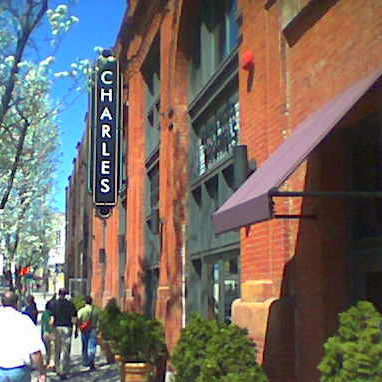
This pre-conference in-person event will be held at the Charles Theater, 1711 N Charles St. This free event is open to the public. A separate registration is required. Please arrive before 6:00 p.m.
Charles Theater · 1711 N Charles St, Baltimore, MD 21201
There will be no virtual broadcast of the film or discussion.
Wednesday, April 17
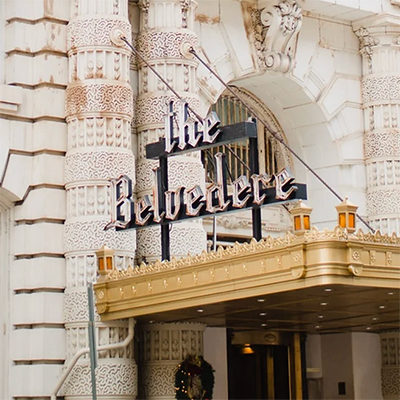
Conference sessions on Wednesday, Thursday and Friday will be held at The Belvedere, located in historic Mt. Vernon in downtown Baltimore. The address and entrance is: 1 East Chase Street. All sessions will be held on the 12th floor in the Grand Ballroom and Platinum Ballroom.
The Belvedere · 1 East Chase Street, Baltimore, MD 21202
Plenary / 9:00–10:30 am EDT
Hybrid Minds: What is it like to use neuroprostheses, and why does it matter?
This panel considers neuroprostheses that integrate the brain, mind, neurotechnological artifact and software into a hybrid form that blurs the boundaries between devices, body and mind — which we call the hybrid mind. Four presentations addressed these different aspects of the hybrid mind.
- Ian Burkhart – How did I relate to my neuroprosthesis?
- Jennifer Chandler – What is it like to communicate with a neuroprosthesis?
- Christoph Bublitz – Are neuroprostheses part of the body or mind?
- Marcello Ienca – Converging ethics for smart neuroprostheses
Break / 30 minutes
Plenary / 11:00 am EDT
Mind Meets Art: Neurology, Research Participation, and Social Justice
In this panel discussion, speakers reflected on the challenges and opportunities of participatory and social justice arts to disrupt dominant neurological disease narratives.
- Naila Kuhlmann, McGill University
- Maria Bee Christensen-Strynø, University of Copenhagen
- Pia Kontos, University of Toronto
- Stefanie Blain-Moraes, McGill University
Published paper: Kuhlmann, N., Kontos, P., Christensen-Strynø, M.B. et al. Convergence of neurodegeneration and the arts: a conversation between researchers about stigma, co-creativity, and transformation. Res Involv Engagem 11, 22 (2025). https://doi.org/10.1186/s40900-025-00696-1
Break / 12:00–1:00 PM EDT
Lunch
Plenary / 1:00–2:30 PM EDT
Mentoring Lecture by Sara Goering
Sara Goering, recipient of the Judy Illes Award, gave a talk about mentoring.
Watch Talk
Mentoring Activity
Matched mentors and mentees used this time to meet with each other. In-person attendees met in the conference space and virtual participants met in Gather. Everyone not matched was encouraged to mingle and talk with other attendees.
Break / 2:30 PM EDT
Plenary / 3:00–4:00 PM EDT
Research Talks
- Bridging the Governance Gap: Translating Global Neurorights to a Community-Engaged Framework in the United States. Favour Nerrise. (3:00 p.m., virtual)
- Human brain organoid transplantation: testing the foundations of animal research ethics.
Alexandre Erler. (3:15 p.m., virtual) - Risk factors and ethical considerations for developing and commercializing neurotechnologies: Findings from interviews with institutional officials. Tristan McIntosh, Meredith Parsons, Erin Solomon, Maya Skolnik. (3:25 p.m., virtual)
- To Explant or not to Explant: Deliberations on the Explantation of Neural Devices within Research Ethics Committees. Katherine Bassil, Karin Jongsma. (3:40 p.m., in-person)
- It’s Time for Community-Based Participatory Research in Neuroethics. Michelle T. Pham, Eran Klein, Sara Goering. (3:50 p.m., in-person)
Watch Talks »
Concurrent / 4:00–5:00 PM EDT
In-Person Poster Presentations
This session will focus on poster presentation judging. All in-person presenters are expected to present for a judge. See the presentation formats page for details and instructions. In-person presentations will not be broadcast.
Virtual Poster Presentations
Virtual participants will present their research in the Gather Poster Halls. The presentation formats page has instructions for submitting posters, slides and videos to be installed. Reference the Presentations page for a list of all posters and talks and the Virtual Participation page for details about using Gather.
Adjourn / 5:00 PM EDT
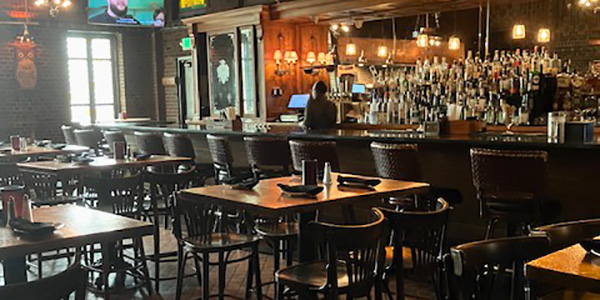
The Owl Bar, 1 East Chase Street, Baltimore, MD 21202
In-Person Networking at Owl Bar
Starting right after the poster session, there will be a networking happy hour from 5-6pm at the Owl Bar, located on the first floor of the conference venue. Light appetizers will be provided and attendees can purchase their own drinks. All are welcome to join. The space will allow for about 25-30 people in our party. Students, trainee, and first-time meeting attendees are especially encouraged to attend.
- Several leads of the INS Affinity Groups are planning to attend both the in-person and virtual social hours, and can talk about what their respective groups are focusing on.
- Members of the Dana Foundation Career Network in Neuroscience and Society will also be at the in-person INS social at the Owl Bar and can speak about career resources.
Virtual Networking in Gather
Join your colleagues from around the world in the Gather Lounge.
Gather »
Thursday, April 18
The Belvedere · 1 East Chase Street, Baltimore, MD 21202
Plenary / 9:00–10:00 aM EDT
The Challenges of Neuroenhancement: Comparative Legal Perspectives from US, EU, and Japan
This session focused on the progress of neurotechnology in the broadest sense and its potential applications for improving human function in the near future, such as improving performance in athletic, academic, and professional environments. The state of national, regional, and even international laws and regulations will then be discussed from the perspectives of constitutional law, culture, and public policy.
- Tamami Fukushi (moderator)
- Masatoshi Kokubo, The University of Tokyo and Keio University Global Research Institute
- Gary Marchant, Sandra Day O’Connor College of Law
- Carla Maria Gulotta, University Milano-Bicocca
- Keigo Komamura, Keio University
- Ricardo Chavarriaga, CLAIRE Office Switzerland
Recording »
Plenary / 10:00–10:30 AM EDT
FDA Fireside Chat
This session explored FDA perspectives on and experiences with protecting patients in neurological device research and translation, and associated neuroethics considerations.
- Mary Keszler, Medical Officer, FDA
- Julia Slocomb, Senior Lead Reviewer, FDA
- Francis Shen, University of Minnesota Law School (moderator)
Recording »
Break / 30 minutes
Concurrent / 11:00 am–12:00 PM EDT
Drawing What Matters: A Comics Workshop
In this hands-on workshop, participants will use comics to identify and reflect on the neuroethics issues that they find most pressing. The engagement is a means of building relationships in solidarity, and of recognizing historically marginalized voices, forms of expression, and narratives.The workshop will be guided by facilitators with experience in neuroethics, education, the arts, and social justice.
- Ann Fink, Lehigh University
- Gillian Hue, Emory University
- Tim Brown, University of Washington
This event will not be broadcast to virtual participants.
Concurrent / 11:00 AM–12:00 PM EDT
MindMaestroes: A Neurofeedback Now & Perspectives for the Future
This session will be a guided exploration of the MindMaestroes interactive audiovisual brain–computer interface installation. Guided by the creators, users can generate an audiovisual scene using their neural signals. The creators will also discuss the prospects of and potential applications of similar BCI systems.
- Robert Clarke, University of Bath
- Christian Curtis, Sononaut
Concurrent / 11:00 AM–12:00 PM EDT
Demystifying NIH BRAIN Initiative Neuroethics Funding: Opportunities, Guidance, and even a few Answers
In this roundtable discussion, BRAIN Neuroethics Program leads and BRAIN Initiative supported neuroethicists will provide an overview of funding opportunities for supporting neuroethics research across multiple stages of the career development pipeline. Presenters will share their unique experiences across a range of funding mechanisms, discuss BRAIN Initiative scientific priorities and funding processes, and share resources for developing competitive applications.
- Nina Hsu, BRAIN Neuroethics Program, NIH
- Jay Churchill, BRAIN Neuroethics Program, NIH
- Laura Cabrera, Pennsylvania State University
- Ashley Feinsinger, David Geffen School of Medicine, UCLA
- Gabriel Lázaro-Muñoz, Harvard Medical School and Massachusetts General Hospital
Break / 12:00–1:00 PM EDT
Lunch
Plenary / 1:00–2:40 PM EDT
Research Talks
Authors of top abstract submissions will present their research and answer audience questions. Presenting authors are in bold. Approximate start times for each talk are in parentheses.
- “If there were more resources we could have done more”: Investigator perspectives on post-trial responsibilities in neural implant trials. Nathan Higgins, John Gardner, Adrian Carter. (1:00 p.m.)
- The Right to be Recognized? A Neuroethics Case Study on the Risks and Harms of Qualitative Data De-Identification Norms. Erika Versalovic, Asad Beck, Sara Goering, Timothy E. Brown. (1:15 p.m.)
- Demystifying the Risk of Reidentification in Neuroimaging Data – A Technical and Regulatory Analysis. Anita Jwa, Oluwasanmi Koyejo, Russell Poldrack. (1:25 p.m.)
- Agency and vulnerability: The dual-aspects of psychedelic-facilitated neuroplasticity.
Logan Neitzke-Spruill (1:35 p.m.) - Neuroethics and trans studies: mapping an overdue overlap. Reina (Roland) Nadler (1:50 p.m.)
- Neurocorrective Offers and Manipulative Pressure. Sebastian Jon Holmen, Emma Dore-Horgan (2:00 p.m.)
- Public perceptions of emerging neurotechnologies used to target mood, memory, and motor symptoms. Rémy A. Furrer, Amanda R. Merner, Ian Stevens, Peter Zuk, Theresa Williamson, Francis X. Shen, Gabriel Lázaro-Muñoz. (2:10 p.m.)
- Human supremacy in neuroethical discourse about human-nonhuman neural chimeras.
L. Syd M Johnson (2:25 p.m.)
Watch Talks »
Break / 20 minutes
Concurrent / 3:00–4:00 PM EDT
In-Person Poster Presentations
This will be an open presentation and networking time for authors and attendees. See the presentation formats page for details and instructions. In-person presentations will not be broadcast.
Virtual Poster Presentations
Virtual participants will present their research in the Gather Poster Halls. The presentation formats page has instructions for submitting posters, slides and videos to be installed. Reference the Presentations page for a list of all posters and talks and the Virtual Participation page for details about using Gather.
Plenary / 4:00–5:00 PM EDT
Awards and Recognitions
We recognized members of our community making significant life-long contributions to the field and authors of outstanding talks and posters presented at the meeting.
- Society award recipients
- Essay contest authors
- Poster presenters
Performance / 6:00 pm EDT
Stavros Niarchos Foundation Parkway Theatre, 5 W North Ave, Baltimore, MD 21201
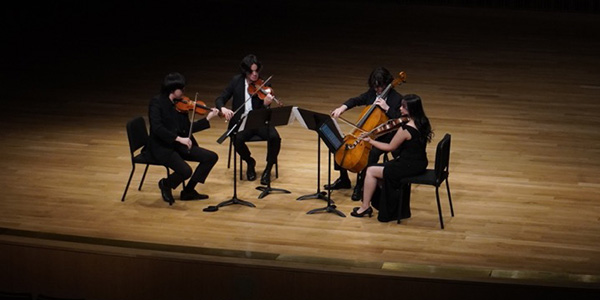
Music, Movement and Healing: Ethical Considerations in Embodied Experience
Incorporating musical and dance performance, dialogue, and participatory creative activity, this presentation will explore the ways in which both beholding and participating in music-making and dancing can release sensations and emotions. While music and dance have the power to heal, they also have the power to harm. How can they be introduced into the medical environment safely, and what ethical issues arise when we do so?
- Kerry Devlin, The Johns Hopkins Center for Music and Medicine
- Sarah Hoover, The Peabody Institute of The Johns Hopkins University
- Asya Shaw, The Peabody Institute of The Johns Hopkins University
Nosremé Quartet musicians (pictured):
- Pei Wu Derek Chen, violinist
- Hsiang-Hsin Ching, violist
- Kuan-Hao Yen, violinist
- Alex Wu, cellist
Sponsored by:

Friday, April 19
Plenary / 9:00-10:30 am EDT
Neurorights Debate
Do emerging neurotechnologies raise fundamental new questions that are not addressed by current regulations? Do we need new human rights to address issues raised by emerging neurotechnologies? This session brings together four debaters from diverse geographical locations for an interactive discussion about neurorights and neurotechnology governance.
- Sjors Ligthart, Utrecht University
- Abel Wajnerman Paz, Pontificia Universidad Catolica de Chile
- Diego Borbón, Universidad Externado de Colombia
- Laura Cabrera, Pennsylvania State University
- Marcello Ienca, Technical University of Munich (moderator)
Recording »
Break / 30 minutes
Plenary / 11:00 am–12:00pm EDT
Stigma and the Brain Disease Model of Chronic Pain – Helping or Hurting?
This session explores the neuroethical implications of brain disease explanations of chronic pain on stigma. Panelists’ presentations shed light on the complexities of neuroessentialist explanations of chronic pain and explore potential avenues for improving interventions in pain management to reduce rather than entrench stigma for people living with chronic pain.
- Daniel Buchman, University of Toronto (moderator)
- David Seminowicz, University of Western Ontario
- Iris Coates McCall, Centre for Addiction and Mental Health
- Emeralda Burke, Unity Health Toronto
- Jada Wiggleton-Little, Cleveland Clinic