
Neuroethics 2025
Schedule
Registration
Lectures

Prof. Ophelia Deroy
Ludwig-Maximilians-Universität München
- Talk title: Neurotechnologies and the Ethics of Unresolvable Questions
- Talk time: 11:00 a.m. Wednesday, April 23, 2025
- Recipient: SINe Award 2025 in Neuroethics and Philosophy of the Neurosciences
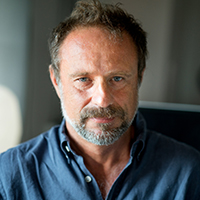
Marcello Massimini MD, PhD,
Professor of Neurophysiology
Department of Biomedical and Clinical Sciences, University of Milan
IRCCS Fondazione Don Carlo Gnocchi, Milan
- Talk title: Consciousness and Network Complexity: from Principles to Bedside
- Talk time: 2:30 p.m. Wednesday, April 23, 2025
- Recipient: SINe Award 2025 in Neuroscience

Dr. Renée Hartig
Nathan Kline Institute for Psychiatric Research / NYU School of Medicine
- Talk title: Towards a Global Research Network: A Framework for Non-Human Primate Neuroscience
- Time: 4:00 p.m. Thursday, April 24, 2025
- Session: ELSA Excellent Paper in Neuroscience Award Talk
- Recipient: ELSA EPNA Award 2024
Dr. Renée Hartig studied neural and behavioural science at the University of Tübingen, Germany. In 2015, she co-founded Pro-Test Deutschland e.V. to promote science communication on animal research. She earned her doctorate summa cum laude in 2020 after investigating primate-specific sensory processing. Now at the Nathan Kline Institute and NYU School of Medicine, she applies translational approaches to study brain function.
Research Talks
Hey Siri! what should I target? AI-powered neuroenhancement in the military and the question of legal and moral responsibility
Joseph White. Department of Philosophy, Central European University.
All in my head? Brain morphology, social determinants of Health, and neuroethics in the Symptomatology of adult post-traumatic stress disorder
Craig McFarland (1); Henri Garrison-Desany (2); Christy Denckla (2). 1. Harvard University; 2. Harvard T.H. Chan School of Public Health. Presenter: Craig McFarland
The impact of bci on autonomy: a relational perspective
Alessia Cadelo. Lumsa University.
The Ethics of Artificial Intelligence in Neurosurgery: Examining Moral Responsibility and Accountability in Medical Practice
Binh Trang. University of North Carolina at Chapel Hill.
Protecting our thoughts: Are data protection frameworks ready for implantable brain-computer interfaces?
Julian D Sandbrink (1,2), Michael J Young (1,3). 1. Harvard Medical School; 2. Charité Universitätsmedizin Berlin; 3. Massachusetts General Hospital Center for Neurotechnology and Neurorecovery. Presenter: Julian D Sandbrink
To be excluded or commodified: The risks of AI-driven precision medicine in the clinical neurosciences
Ian Stevens (1,2), Benjamin Collins (3). 1. The Hastings Center; 2. Center for Bioethics, Harvard Medical School; 3. Vanderbilt University Medical Center. Presenter: Ian Stevens
When data disagrees: ethical challenges in weighing conflicting data sources for personalized neuromodulation
Meghan Hurley (1), Eric Storch (2), John Herrington (3), and Kristin Kostick-Quenet (1). 1. Center for Medical Ethics and Health Policy, Baylor College of Medicine; 2. Department of Psychiatry and Behavioral Sciences, Baylor College of Medicine; 3. Department of Child and Adolescent Psychiatry and Behavioral Sciences, Children’s Hospital of Philadelphia. Presenter: Meghan Hurley
Bridging gaps in neurotechnology development: Industry insights on navigating academic collaborations
Tristan McIntosh, Meredith Parsons, Erin Solomon, Michael Kudom-Agyemang, Judith Mwobobia. Washington University School of Medicine, Bioethics Research Center. Presenter: Tristan McIntosh
Institutional Review Boards in Neurotechnology Research: A Critical Examination
Megh Marathe (1), Michelle T. Pham (2). (1) Department of Media & Information, Center for Bioethics & Social Justice Michigan State University; (2) Center for Bioethics and Social Justice, Department of Medicine, Michigan State University. Presenter: Michelle T. Pham
Self-tracking, Neurotechnology, and Epistemic Self-confidence
Nicolai Wohns, Natalie Dorfman. Department of Philosophy, University of Washington. Presenting: Nicolai Wohns
A Critical Examination of Consent and Alienation in the Context of Brain-Computer Interfaces (BCIs)
Luiza de Paula Araujo Galvao Cunha. University of Barcelona.
Towards a low-tech neuroethic
Timothy Daly. Bordeaux Population Health, Université of Bordeaux & INSERM; Bioethics Program, FLACSO Argentina.
Neurotechnology in Support of the Resocialization of Juvenile Offenders in Brazil
Antonio Jorge Pereira Júnior. University of Fortaleza, School of Law and PhD Program on Constitutional Law.
The 5C Ethical Lens for Multilingual Neurotechnology and Low-Resource Language Inclusion
Abigail Oppong. Independent.
Safeguarding the mind from AI: a context-based or a risk-based approach? Philosophical, ethical, and legal perspectives
Fiorella Battaglia (1), Corrado Claverini (1), Giuseppe Di Vetta (2), Gaia Fiorinelli (2). 1. Unisalento – Salento University (Italy); 2. Sant’Anna School of Advanced Studies Pisa (Italy). Presenting: Gaia Fiorinelli, Corrado Claverini
100 Years of EEG: Ethical Challenges in the Age of AI
Wing Yu Kan (1), Tammy Yue Ken Tam (2). 1. St Stephen’s College 2. SunRise Kids. Presenting: Wing Yu Kan, Tammy Yue Ken Tam